
We live in a world where technology powers nearly every aspect of modern life. This is especially true in healthcare, where patients use the latest technologies to find care options and referrals. The reality is that to stand out in the healthcare industry, you will need to do more than offer information and good service. You will need to attract, engage, and retain patients and new customers across multiple channels.
Healthcare organizations that invest in the right marketing strategies and technologies are poised to outpace competitors. But which marketing technologies are must-haves? In this article, we will go over the marketing technologies and tactics you should look into to grow your healthcare organization.
What is Marketing Technology?
Marketing technology (or martech) includes any technological tools that help marketing teams complete their work. These tools help create, execute, manage, orchestrate, and measure the performance of your marketing efforts, including content creation and customer engagement.
Marketing technology is especially important in the healthcare industry because it can help amplify patient relationships. With the right technology, you can:
- Reach the right patients at the right time
- Provide personalized, proactive education
- Track real ROI across channels
- Stay HIPAA-compliant while scaling outreach
What Technologies Should You Invest In?
With every new cycle, technology advances at a pace that fundamentally reshapes how organizations operate, compete, and communicate with their audiences. Here are a few technologies that you may find useful for the expansion of your marketing efforts:
Artificial Intelligence (AI)
Artificial intelligence (AI) is already driving a meaningful impact for healthcare marketers. This technology automates certain tasks, particularly those that are repetitive, routine, or require a high level of accuracy. It has also freed humans to focus on more complex, creative work.
Some of the tasks that you find useful for marketing include:
- Data Analytics: AI helps you make sense of customer information and generate insights into behavior, performance, and campaign effectiveness.
- Content Creation: Generative AI, powered by large language models (LLMs) like ChatGPT, Perplexity, and Claude, can help brainstorm campaign concepts and speed up content creation while reducing costs.
- Automation: LLMs can also automate repetitive tasks, appointment confirmations, yearly check-up reminders, and educational content (blog articles, tips, etc.), to boost productivity, reduce errors, and improve efficiency. This can elevate the quality and consistency of your communication.
SEO, GEO, & AEO
When medical needs emerge, the first place healthcare consumers go for information is a search engine. SEO helps organizations optimize their search strategy so their products and sites can appear higher in customer search results. You can also embrace newer technologies, including GEO and AEO. GEO (generative engine optimization) and AEO (answer engine optimization) aim at optimizing an organization’s content for AI searches. AEO optimizes content to become the direct answer in AI searches, while GEO optimizes content so AI models can easily pull it into generative answers. All three tools put your hospital, treatment center, nursing facility, or practice in front of consumers searching for your services.
Healthcare Customer Relationship Management (CRM)
A CRM platform integrates patient data from many sources to help you build, launch, optimize, and measure multichannel campaigns. With a CRM, you can personalize outreach to enrich engagement, improve service, and encourage long-term relationships. These solutions make it easy to manage patient relationships (as well as the data associated with them). A CRM can make it easy to store all contact information, patient preferences, history, and other important data in one central location.
Content management system (CMS)
A CMS streamlines and classifies marketing content and integrates with your CRM to keep future content aligned with brand guidelines. It also creates a process for content repurposing and reuse, so your team distributes content efficiently.
Engagement center
An engagement center is an optimized call center that supports personalized experiences for inbound and outbound calls. It integrates CRM data to give representatives a 360-degree view of each caller, including past engagements over the phone and online. Armed with that context, representatives hold relevant, personalized conversations that strengthen the individual’s relationship with your system.
Cybersecurity
A crucial aspect of your organization is how you market your products and services. However, protecting your organization from digital threats is also important. These threats include data breaches, phishing attacks, and malicious ads, which can disrupt marketing campaigns and damage a company’s reputation. This is especially important in healthcare, where you must protect patient information and adhere to HIPAA. To avoid these issues, follow best practices, including limiting access to sensitive data, using strong, unique passwords, and monitoring ad campaigns for fraud.
Challenges to Successfully Adopting New Technology
1: Skepticism
One of the biggest problems you will face is not the technology itself. Rather, it is getting employees to adopt it, rely on it, and make it a part of their daily work. When introducing new technologies, many employees will wonder what is in it for them. Translate high-level organizational goals into personal, tangible wins. The best way to do this is by selling relief, not features. This means emphasizing reduced workload or fewer errors, rather than the benefits the new technology brings to CRM or SEO.
2: Department Silos
Departmental silos prevent marketers from delivering consistent communication to individuals. To stay competitive, you must evolve with today’s fast-paced digital world, choose tools with integration capabilities, and allow you to work as a cohesive system.
3: Insufficient Budgets
Budget constraints also hold marketers back. Hospital marketing budgets remain modest when compared to other industries, which pour far more into acquisition. To compete on a modest budget, marketers need smarter ways to stretch every dollar.
5: Proof of Value
The last barrier is proving it worked. When data lives in separate systems, tying a conversion back to the channel that earned it is hard and makes defending spend harder still. Attribution across search, social, connected TV, and the engagement center is the difference between reporting activity and proving growth.
Closing Remarks
Embracing the latest marketing technologies and strategies is an essential, yet complex, component of your organization’s success. It guides the right patients to the right care at the right time. One way to stay ahead is to harness technologies such as AI and cybersecurity to drive your organization’s growth. As you consider adding new tech to your organization, don’t lose sight of who this ought to be for. The key is to stay flexible and open-minded so you can
thrive as technology evolves faster than ever.
Author Bio
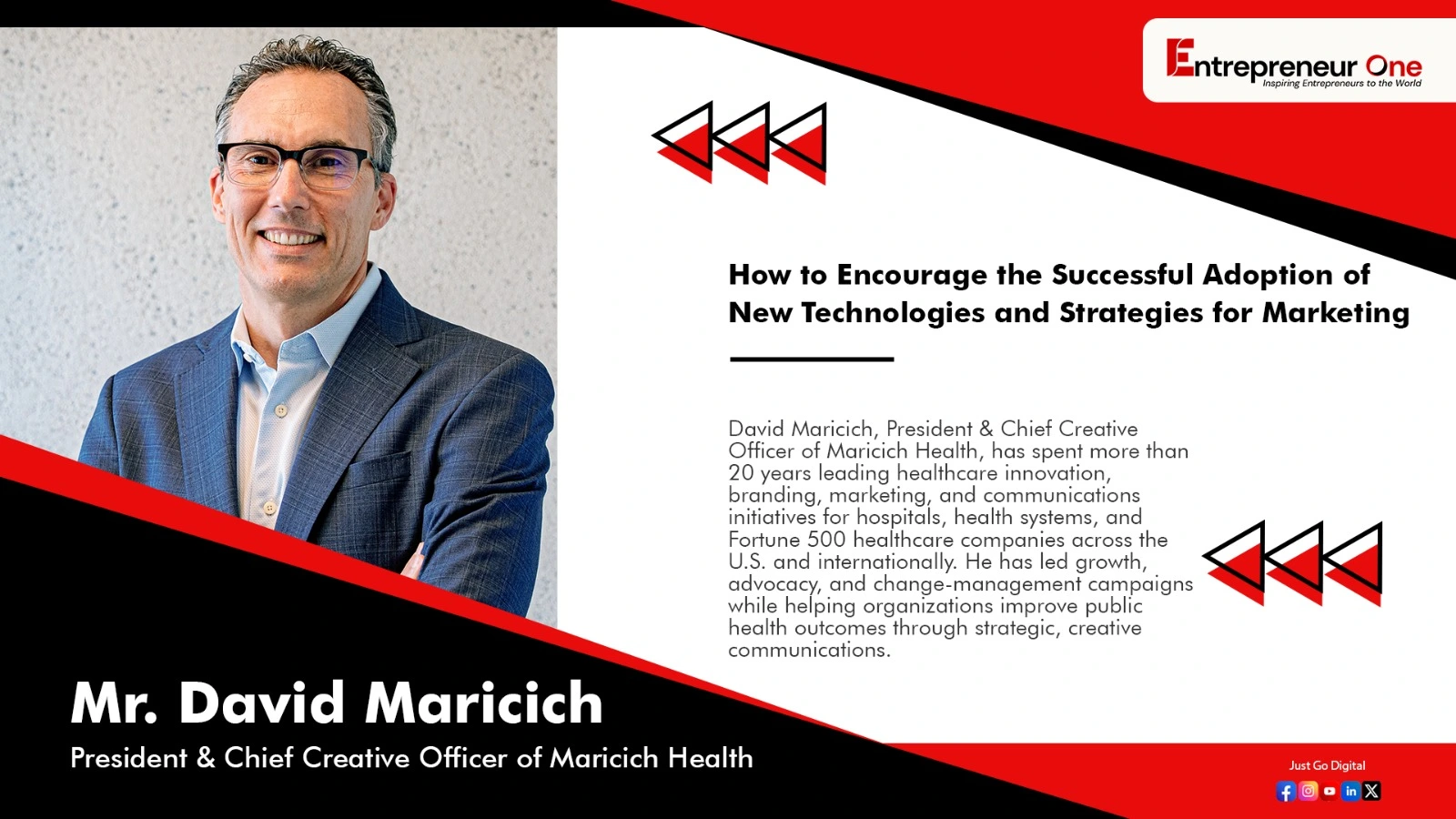
Author: David Maricich
Author Bio: David Maricich, President & Chief Creative Officer of Maricich Health, has spent more than 20 years leading healthcare innovation, branding, marketing, and communications initiatives for hospitals, health systems, and Fortune 500 healthcare companies across the U.S. and internationally. He has led growth, advocacy, and change-management campaigns while helping organizations improve public health outcomes through strategic, creative communications.