
Every founder has a list of things the business “needs” before launch. For many startups, that list includes equipment: laptops and servers, cameras and lighting, vehicles, kitchen appliances, tools, machinery or event gear. Buying it all upfront feels like the responsible, permanent choice.
In practice, buying too much too early is one of the quieter ways young businesses run out of cash. In the first year, when demand is uncertain and every rupee, dollar or pound needs to stretch, an asset-light approach built on renting and leasing often gives founders more room to survive and grow.
The First-Year Cash Problem
Startups rarely fail because they lack equipment. They fail because they run out of money before they find a repeatable way to make it. Every large purchase shortens the runway.
When you calculate startup costs, it helps to separate one-time expenses from ongoing costs and to be realistic about how long it will take to reach steady revenue. The SBA’s guide to calculating startup costs is a useful framework for this exercise, even for founders outside the United States. Once you see the full picture, it becomes clear how much equipment purchases can crowd out marketing, hiring and working capital.
Why Renting Makes Sense Early
You keep cash for growth. Money not spent on equipment can go into customer acquisition, product development or a safety buffer.
You learn what you actually need. Founders often overestimate their equipment needs. Renting first shows which items are used every day and which are rarely touched.
You avoid being stuck with the wrong model. If your business pivots, rented equipment can be returned. Purchased equipment has to be sold, usually at a loss.
You can scale up or down quickly. Seasonal businesses, event companies and project-based firms can match equipment to demand instead of carrying idle assets.
Maintenance becomes someone else’s job. Many rental agreements include servicing and replacement if something breaks.
Which Startups Benefit Most
Asset-light thinking applies across many sectors:
- Construction and trades: renting excavators, scaffolding and specialist tools for individual jobs.
- Events and hospitality: renting tents, furniture, sound systems and lighting per event.
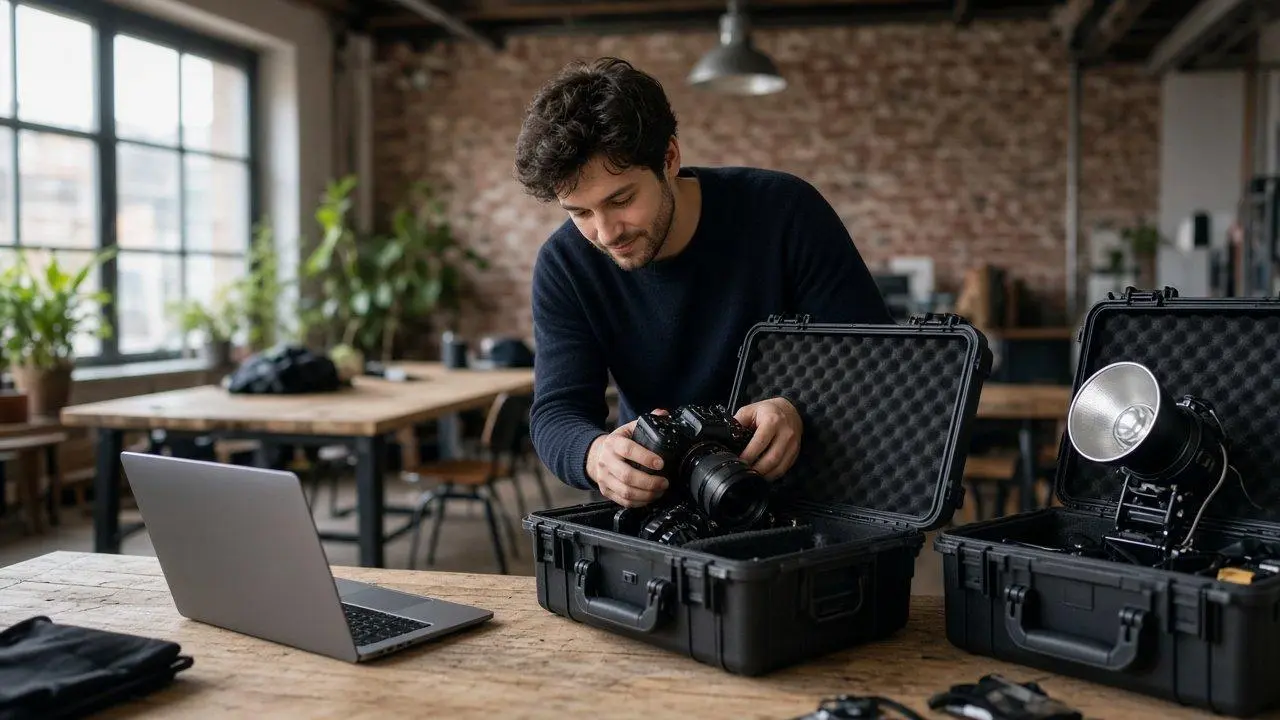
- Media and content: renting cameras, lenses and drones for specific shoots.
- Food businesses: leasing commercial kitchen equipment or using shared kitchens.
- Tech startups: using cloud infrastructure instead of buying servers.
- Fitness and wellness: leasing equipment until membership numbers are proven.
The common thread is uncertainty. Wherever demand is not yet predictable, flexibility has real value.
When Buying Does Make Sense
Asset-light does not mean never buying. Ownership becomes sensible when:
- You use the equipment almost every working day.
- Rental costs over a year approach or exceed the purchase price.
- The equipment is central to your competitive advantage.
- Reliable rental supply is not available when you need it.
- You have the cash or financing to buy without threatening your runway.
A simple test is to track rental spend by item for six months. If a particular item keeps appearing and its rental cost is climbing towards its purchase price, that is your signal to consider buying or leasing it long term.
How the Rental Industry Is Changing
Renting used to mean phone calls, paper contracts and uncertain availability. That is changing fast. Many rental providers now offer online rental marketplaces and booking tools where customers can check availability, compare prices, sign agreements and pay deposits from their phone. For startups, this makes renting almost as convenient as buying online, with far less financial commitment.
This shift is also creating new startup opportunities. Founders are launching rental businesses in niches such as camera gear, baby equipment, party supplies and power tools, using digital platforms to manage bookings and inventory from day one.
Building an Asset-Light Mindset
Being asset-light is about more than equipment. It is a way of thinking about the business:
- Rent office space flexibly or work remotely until the team grows.
- Use contractors and freelancers before committing to full-time hires for every role.
- Choose subscription software over large one-off licences.
- Partner with suppliers who can hold stock rather than buying inventory in bulk.
Each decision keeps fixed costs low and preserves the ability to adapt. This flexibility is one reason startup trends keep evolving towards leaner, more adaptable business models.
Practical Tips for Renting Smart
- Get quotes from several rental providers and ask about weekly and monthly discounts.
- Read the agreement carefully, especially damage, insurance and late-return clauses.
- Photograph equipment condition at pickup and return.
- Build a relationship with one reliable provider; loyal customers get better rates and priority availability.
- Track rental costs by project so you know your true margins.
Common Objections, Answered
“Renting is more expensive in the long run.” Sometimes. But the long run only matters if the business survives the short run. Flexibility in year one is often worth the premium.
“Customers will judge us for not owning equipment.” Customers care about results, not ownership. A well-maintained rented machine delivers the same quality as an owned one.
“Rentals won’t be available when we need them.” This is a real risk in busy seasons. Book ahead, build relationships and keep a backup supplier.
A Simple Year-One Equipment Plan
If you are unsure where to start, try this approach. Before launch, list every piece of equipment you think you need and mark each item as essential daily, occasional or nice to have. Buy only the small, inexpensive essentials. Rent or lease the expensive essentials on flexible terms. Rent occasional items only when a specific job requires them, and drop the nice-to-have list entirely until revenue is stable. Review the list every quarter with real usage data. This keeps the business lean while still giving the team what it needs to deliver good work.
Final Thoughts
The first year of a startup is about learning and survival. Renting equipment keeps cash in the business, reduces risk, and lets founders discover what they really need before committing to big purchases. Once demand is proven and patterns are clear, buying the right assets becomes a confident decision rather than a hopeful one.